+91 7986546029
 Web Matrix Nova Team
Modern Web Design Trends Every Business Should Follow (2026)
Your website is often the first impression potential customers have of your business. In 2026, having a visually appealing website is no longer enough. Modern web design focuses on creating fast, user-friendly, and conversion-driven experiences that keep visitors engaged and encourage them to take action. Businesses that invest in updated web design trends not only improve customer satisfaction but also gain better search engine rankings and higher conversion rates.
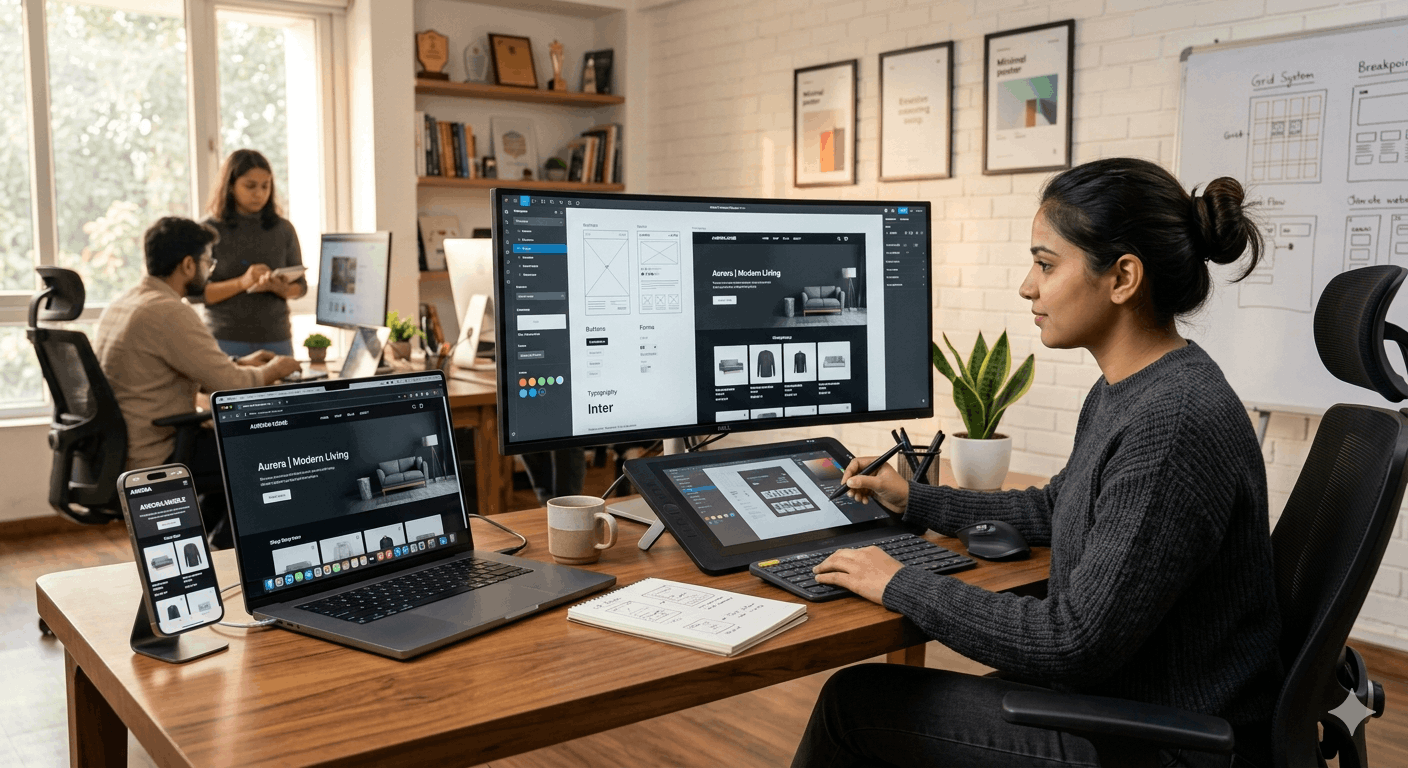
One of the biggest web design trends in 2026 is minimalist and clean layouts. Websites with simple navigation, organized content, and plenty of white space are easier to browse and help users find information quickly. A clutter-free design creates a professional appearance, improves readability, and enhances the overall user experience. Modern businesses are moving away from overcrowded pages and focusing on clarity and functionality.
Mobile-first design has become a necessity rather than an option. Since the majority of users browse websites using smartphones and tablets, every business website should be fully responsive across all devices. A mobile-friendly website loads correctly on different screen sizes, offers smooth navigation, and ensures users can easily access information without zooming or excessive scrolling. Google also prioritizes mobile-friendly websites, making responsive design an important factor for SEO.
Website speed continues to play a crucial role in user experience and search rankings. Visitors expect pages to load within seconds, and slow-loading websites often lead to higher bounce rates. Optimizing images, reducing unnecessary scripts, enabling browser caching, and using modern web technologies can significantly improve loading speed. Faster websites not only provide a better experience but also contribute to improved search engine visibility.
Another growing trend is the use of interactive elements and subtle animations. Smooth hover effects, scrolling animations, interactive buttons, and micro-interactions make websites feel more engaging without overwhelming users. When used correctly, these design elements guide visitors through the website and encourage them to explore products, services, or contact forms.
Typography is also becoming more important in modern web design. Businesses are using bold headlines, readable fonts, and clear content hierarchy to improve communication. Well-structured headings, short paragraphs, and visually balanced layouts help users quickly understand the information while improving accessibility and SEO.
Accessibility is another major focus in 2026. A modern website should be usable by everyone, including people with disabilities. Features such as proper color contrast, keyboard navigation, descriptive image alt text, readable font sizes, and accessible forms make websites more inclusive while helping businesses comply with accessibility standards.
Modern websites also prioritize user experience (UX) and user interface (UI) design. Every button, menu, form, and call-to-action should be placed strategically to guide visitors toward their goals. Whether users want to purchase a product, book a consultation, or submit an inquiry, a well-designed user journey increases engagement and improves conversion rates.
Search engine optimization should be integrated into web design from the beginning. Clean HTML structure, optimized images, schema markup, fast loading speed, secure HTTPS connections, and mobile responsiveness all contribute to better SEO performance. A beautiful website is valuable only if potential customers can easily find it through search engines like Google.
Another important trend is integrating AI-powered features such as smart chatbots, personalized recommendations, intelligent search functionality, and automated customer support. These technologies improve customer experience by providing instant assistance and helping visitors find the information they need more efficiently.
Security and trust are equally important. Modern business websites should use SSL certificates, secure contact forms, regular software updates, and reliable hosting to protect customer data. Displaying trust badges, customer reviews, testimonials, and case studies also helps build credibility and encourages visitors to take action.
At Web Matrix Nova, we design and develop modern, responsive, and SEO-friendly websites that help businesses grow online. From custom website development and UI/UX design to website optimization and technical SEO, our solutions are built to deliver exceptional performance, improved user experience, and long-term business success.
Conclusion
Modern web design is much more than attractive visuals. It combines performance, usability, accessibility, mobile responsiveness, and SEO to create websites that deliver real business results. By following the latest web design trends in 2026, businesses can improve user engagement, strengthen their online presence, increase conversions, and stay ahead of the competition in an increasingly digital world.